ServicesGutters
Gutters in Cumberland, IN
We install one-piece aluminum gutters and downspouts that carry water well away from your foundation. Before anything goes up, we check the fascia behind it. Your flower beds are covered, ladders stand on padding, and you hear from us before any part of the plan changes.
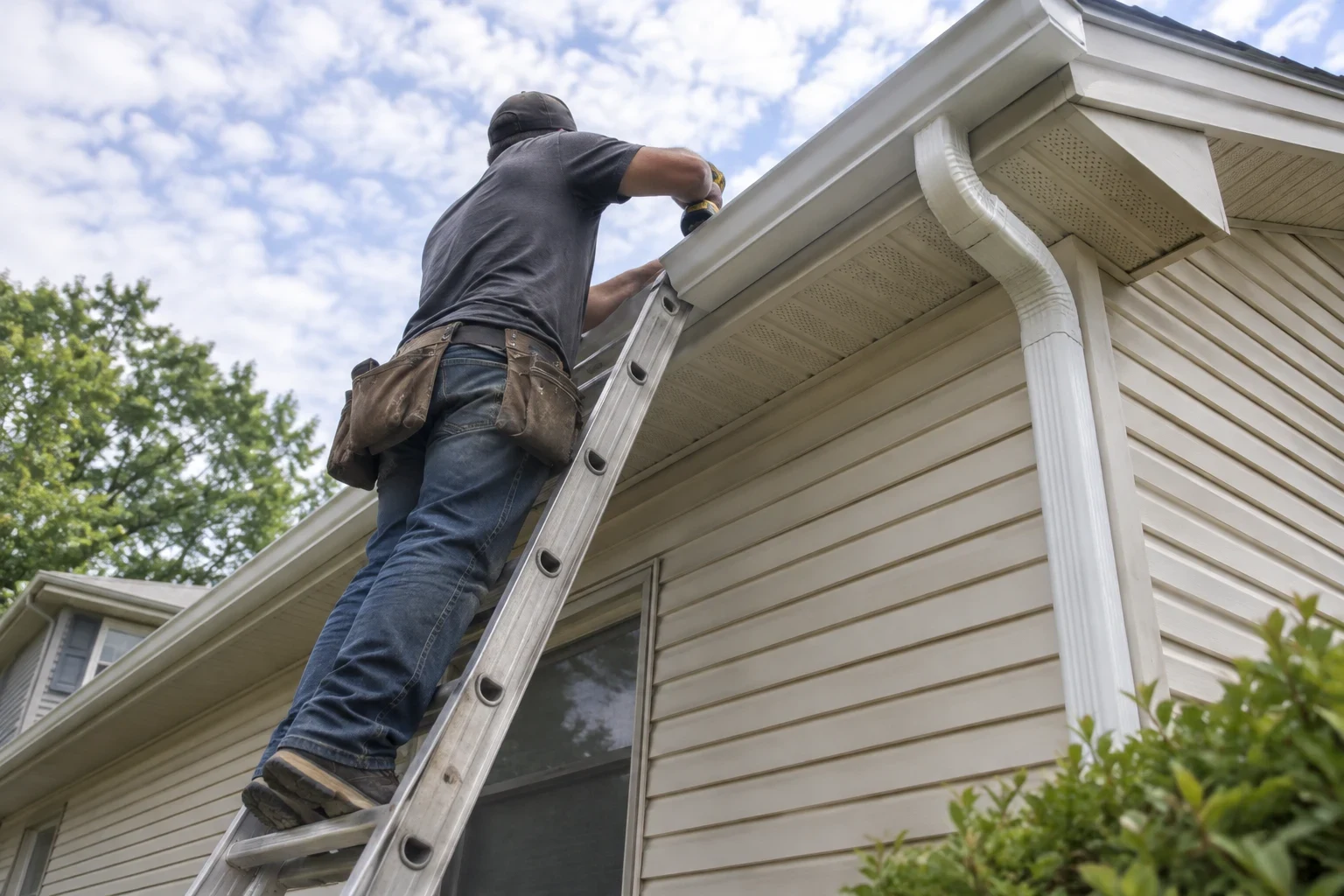
Gutters are part of the roof system
A gutter's job is simple: catch what the roof sheds and move it somewhere harmless. When it fails, the damage tends to show up in other places. You see a soft fascia board, a wet basement corner, or mulch washed out of a bed under the eaves.
We treat gutters as the last piece of the roof, not an add-on. That means sizing them to the roof area and pitch, setting the slope so water actually reaches the downspout, and tying the back edge in under the drip edge so runoff can't slip behind. During a roof replacement we often handle the gutters in the same visit. They can also be done on their own if the roof above is sound.
What our gutter work includes
Continuous aluminum runs
We form gutters on site from a single coil, so each run is one piece from corner to corner. The only joints are at the corners and outlets, which leaves far fewer places for leaks to start.
Sizing for real runoff
Many homes do fine with 5-inch K-style gutters. Steep roofs, long valleys, and large unbroken slopes often need 6-inch gutters with larger 3x4 downspouts. We measure first and explain which fits your roof.
Hidden hangers on proper spacing
Hangers are screwed into the fascia rather than nailed. We set them close together so a gutter loaded with soggy leaves or winter ice stays straight and level.
Fascia check before install
We probe the fascia boards before hanging anything new. If we find rot, we show you photos and tell you what replacing that section involves before we go further.
Downspouts and discharge
Downspouts are placed where they can drain, with extensions or elbows that move water away from the foundation and off your walkways.
Signs your gutters need attention
Water spilling over the front
If a heavy rain sends a sheet of water over the lip, the gutter may be clogged, too small, or pitched the wrong way. Each has a different fix.
Sagging or pulling away
A run that dips between hangers holds standing water and gets heavier every storm. Over time, the fasteners loosen and tear out of the fascia.
Stains, peeling paint or soft wood
Dark streaks behind the gutter, or paint lifting along the trim, usually mean water is getting behind the gutter and soaking the fascia.
Leaking seams and corners
Older sectional gutters drip at every joint. Sealant buys time, but it rarely lasts more than a season or two.
Ice along the eaves
In an Indiana winter, gutters that hold water freeze solid and can help ice back up under the shingles. Poor slope or blocked outlets are often the cause.
Washed-out beds or a damp basement
Trenches in the mulch below the roofline, or moisture inside near a downspout, suggest water is landing too close to the house.
How a gutter day runs
- 1
Inspection and measurements
We look at the roof edge, the drip edge, the fascia, and where water currently goes. You get a written estimate with each item listed, along with photos of anything we found that needs attention.
- 2
Setting up around your home
Before work starts we cover shrubs and beds with tarps and put padding under ladder feet. We also agree with you on where the trailer and coil machine will park, so the driveway stays usable.
- 3
Removal and fascia repair
Old gutters come down carefully and go straight to our trailer. Any rotted fascia we agreed to replace is handled before the new runs go up.
- 4
Forming and hanging
Each run is formed to length on site, hung with hidden hangers, and pitched toward its outlet. We test the slope with water before we pack up.
- 5
Cleanup and walkthrough
We sweep the beds and lawn with a magnet for stray screws and pick up aluminum trimmings. Then we walk the house with you so you can see every downspout and where it drains.
What shapes the cost of gutters
Gutter pricing mostly comes down to how much gutter your roof needs and what we find behind it. Each of these items appears as its own line on your written estimate, so nothing is bundled out of sight. We also offer financing if paying over time suits your household better.
- Linear footage and corners
- Longer eaves and more inside and outside corners add material and labor. A simple ranch with two straight runs costs less than a home with many breaks in the roofline.
- Gutter and downspout size
- Six-inch gutters and 3x4 downspouts cost more than standard 5-inch, but on a large or steep roof they are often what keeps water from overflowing.
- Fascia condition
- Sound fascia means we simply hang the new gutters. Rotted sections have to be replaced first, and we show you before quoting that work.
- Height and access
- Second-story eaves, steep grades, or decks and landscaping under the roofline call for more setup and protection, which adds time.
Questions about gutters
Something not covered here? (317) 793-2581
Should I replace gutters at the same time as my roof?
Often it makes sense. The drip edge and the back of the gutter work together, and doing both in one visit means one setup and one cleanup around your home. If your gutters are fairly new and well pitched, we can usually leave them in place and protect them during the roof work.
Are one-piece gutters really better than sectional?
For most homes, yes. Sectional gutters are pieced together from short lengths, and every joint between them depends on a bead of caulk that hardens and cracks with time. A run formed on site from a single coil has joints only at the corners and outlets, which leaves far fewer spots to drip.
Can you just repair my existing gutters?
Sometimes. Re-pitching a sagging run, adding hangers, or resealing a corner can be a sensible repair when the rest of the system is sound. If the gutters are undersized or the joints are failing all along the house, we'll tell you plainly that replacement is the better use of your money.
Will the work damage my landscaping?
We plan around it. Beds and shrubs are covered, ladders sit on pads, and we discuss where to set up before unloading anything. Downspout placement also takes your beds into account, so water doesn't end up washing them out later.
Did hail or wind damage my gutters, and will insurance cover it?
Dented gutters and downspouts are common after hail and are often part of a roof claim. We can document what we find and work with you and your insurance company on the claim, though the adjuster makes the final call on coverage. Our Storm Damage Repair page covers that process in more detail.
Let's look at where your water goes
We'll check the gutters, the fascia, and the roof edge above them, and explain in plain terms what we see. You decide what happens next.