ServicesTPO Roofing
TPO Roofing in Cumberland
TPO is a single-ply membrane for the flat and low-slope parts of a house, such as porch roofs, rear additions, garages and dormer decks. We weld every seam with hot air over a properly sloped base, and we keep the work area tidy and you informed from start to finish.
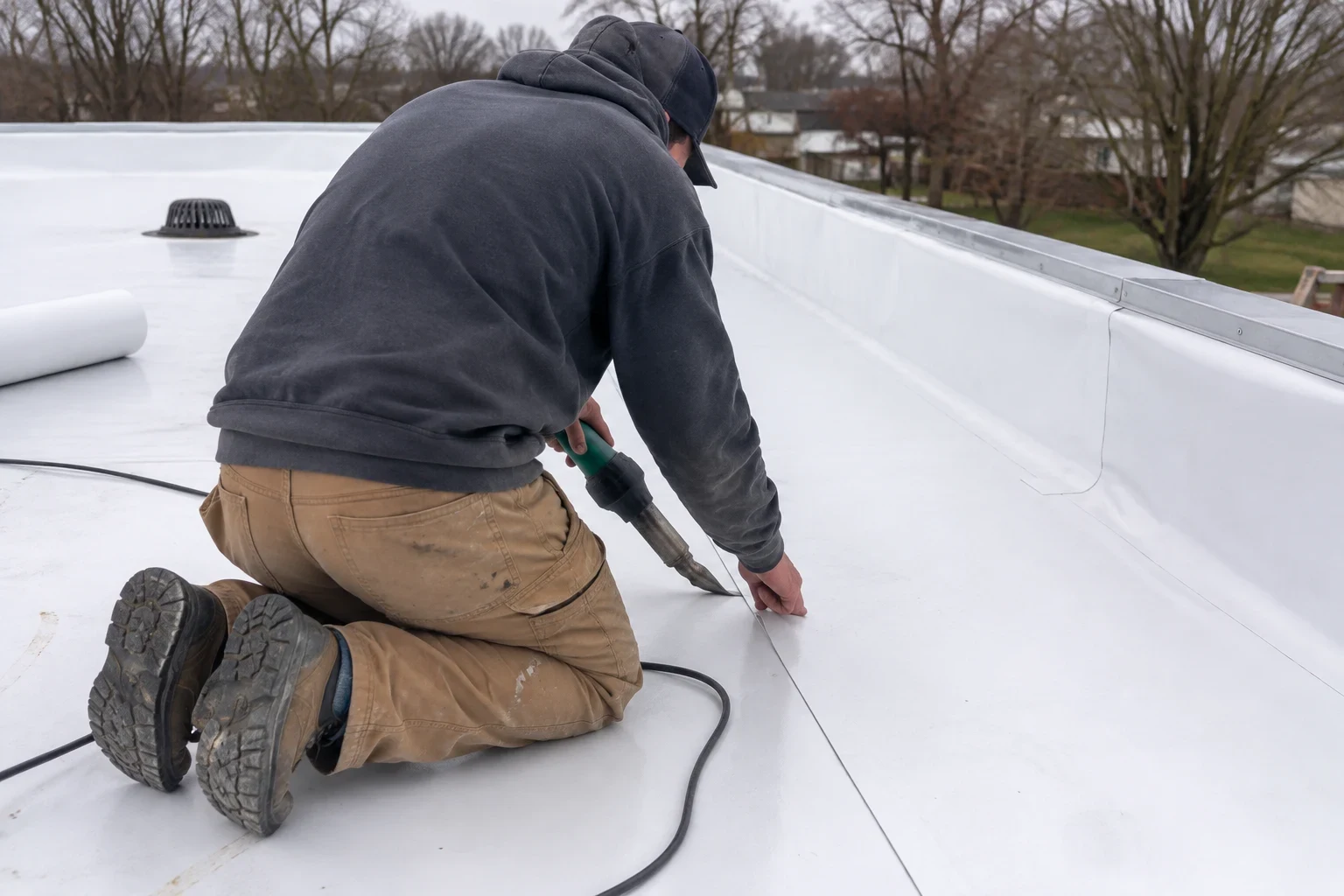
A membrane made for roofs too flat for shingles
Shingles shed water by overlapping, so they need pitch. Below about two inches of rise per foot, water backs up under them and leaks follow. TPO handles low slopes with one continuous sheet. Its seams are fused with hot air into a bond as watertight as the sheet itself, and the light surface reflects much of the summer sun.
Most of the TPO work we do on homes covers one section rather than the whole roof. That might be the flat roof over a sunroom, a low porch tied into a shingled main roof, or a garage that has been patched with roll roofing for years. The joint where the membrane meets shingles or a wall is where these roofs usually fail, so that is where we spend the most care.
If the shingled roof next to your low-slope area also needs attention, we can look at both on the same visit and explain how our shingle roofing and TPO work should meet.
What a TPO installation includes
Tear-off down to the deck
We strip off the old membrane, roll roofing or modified bitumen and look closely at the plywood it was hiding. Any boards that have gone spongy or started to separate are swapped out first, so the new roof sits on solid wood. We photograph what we find and show you.
Insulation and tapered slope
Polyiso insulation board goes over the deck. Where water has been ponding, we use tapered board to move it toward the drain, scupper or gutter.
Heat-welded, probed seams
Every lap is welded with a hot-air gun and then checked along its full length with a probe. A seam that does not pass is rewelded on the spot.
Flashing at walls and edges
The membrane runs up adjoining walls and under the shingle courses, finished with termination bar, counterflashing and matching edge metal. From the yard, the transition looks deliberate rather than patched.
Drainage connections
Scuppers, drains and the gutter at the low edge are fitted to the new roof so water leaves where it should. If the gutter itself is worn, we can quote that under our gutters service.
Protection and daily cleanup
Tarps and plywood cover garden beds, walkways and patio surfaces below the work area. We sweep the ground with a magnet for nails and screws before we leave each day.
Signs your flat roof is ready for TPO
Standing water after rain
Puddles still sitting a day or two after a storm mean the surface has sagged or the slope was never right. Ponding speeds up wear and finds every weak seam.
Cracked or blistered roll roofing
Older asphalt roll roofing and modified bitumen dry out, blister and split at the laps. Patching usually buys a season, not much more.
Stains on the ceiling below
A water mark under a porch roof or addition usually traces back to the wall tie-in or an edge, not the middle of the roof.
Problems that return every spring
Indiana winters freeze water inside open seams and lift them a little further each cycle. If new leaks show up after every thaw, the old covering has likely reached its limit.
A leaking joint at the main roof
Where a low roof meets shingles or siding, mismatched or missing flashing is a common leak source. Replacing the low section lets us rebuild that joint properly.
How a TPO job runs at your home
- 1
Free inspection and written estimate
We walk the roof, measure it, check the decking from below where we can and photograph problem spots. Afterward you receive an itemized estimate on paper, along with our honest view of whether fixing the current roof or replacing it is the better use of your money.
- 2
A plan for your property
Before the crew arrives, we go over where the trailer will sit, which door stays usable and how we will reach the roof without crossing your lawn more than needed. You will know who to talk to throughout the job.
- 3
Tear-off and preparation
Ground protection goes down first. Old material comes off in sections so the roof is never left open overnight, and any deck repair is finished before insulation goes on.
- 4
Membrane, welding and flashing
The membrane is fastened or adhered, the seams are welded and probed, and walls and edges are flashed. Most residential sections take a day or two, depending on size and weather.
- 5
Walkthrough and cleanup
The protective tarps come up, debris is hauled off, and a magnetic sweeper goes across the lawn, beds and driveway to catch stray fasteners. Then we show you the finished roof, with photos of the seams and tie-ins we closed up.
What affects the price of a TPO roof
Every TPO quote we give is built from measurements taken at your home, so the number reflects the roof you actually have. The biggest differences come from what is underneath and how the roof drains. Financing is available if it helps to spread out the cost.
- Size and shape
- Larger areas cost more overall, but small roofs with many corners, curbs or vents take more labor per square foot.
- Condition of the deck
- Rotted plywood or several old layers to remove add time and material. We cannot see all of it until tear-off, so we photograph it and talk with you before replacing extra decking.
- Tapered insulation
- Adding tapered board to correct ponding raises the cost. It is also often the main reason the new roof drains well.
- Membrane thickness and attachment
- A 60-mil membrane or a fully adhered system costs more than a 45-mil, mechanically fastened one. We explain which makes sense for your roof and why.
- Tie-ins and access
- Wall flashings, shingle transitions, skylights and a roof that is hard to reach from the driveway all add labor.
TPO roofing questions
Something not covered here? (317) 793-2581
Can TPO go on just the flat part of my shingled house?
Yes, and that is the most common way we install it on homes. The membrane covers the low-slope section and tucks under the shingle courses above it, with metal flashing at the transition. Done properly, the two roofs shed water as one system.
Will a white roof look out of place on my home?
TPO comes in white, gray and tan, and we can help you choose a color that suits the house. Many low-slope sections are hard to see from the street anyway. We match the edge metal so the visible trim looks finished.
How is TPO different from a rubber roof?
EPDM rubber is a good material, but its seams are glued or taped. TPO seams are melted together with hot air, which makes the joints themselves one piece of membrane. For most residential low-slope roofs, we find welded seams hold up better at laps and corners.
How long will the work take?
A typical porch or addition roof takes one to two days. Larger areas or deck repairs can add time. We pace the tear-off so every section we strip is covered and watertight again before the crew leaves for the evening, and we tell you ahead of time if weather moves the schedule.
Do I need to be home during installation?
No, as long as we can reach the roof and the work area. We do like to talk with you at the start and the end of each day so you know what was done and what comes next.
Does a TPO roof need a permit?
It depends on how much work is involved and what the local building department asks for. Before the job, we confirm whether your project requires one. If it does, we file it ourselves and handle the inspection scheduling, so the paperwork stays off your desk.
See what your flat roof needs
We will look at the membrane, the seams and the joint where it meets the rest of your home, then explain what we found in plain terms. The inspection is free.