ServicesRoof Inspections
Roof Inspections in Cumberland
We look at your roof the way you would if you could get up there yourself: every slope, every seal, and the attic underneath. You get photos, a plain explanation and an honest view of what can wait. The inspection is free.
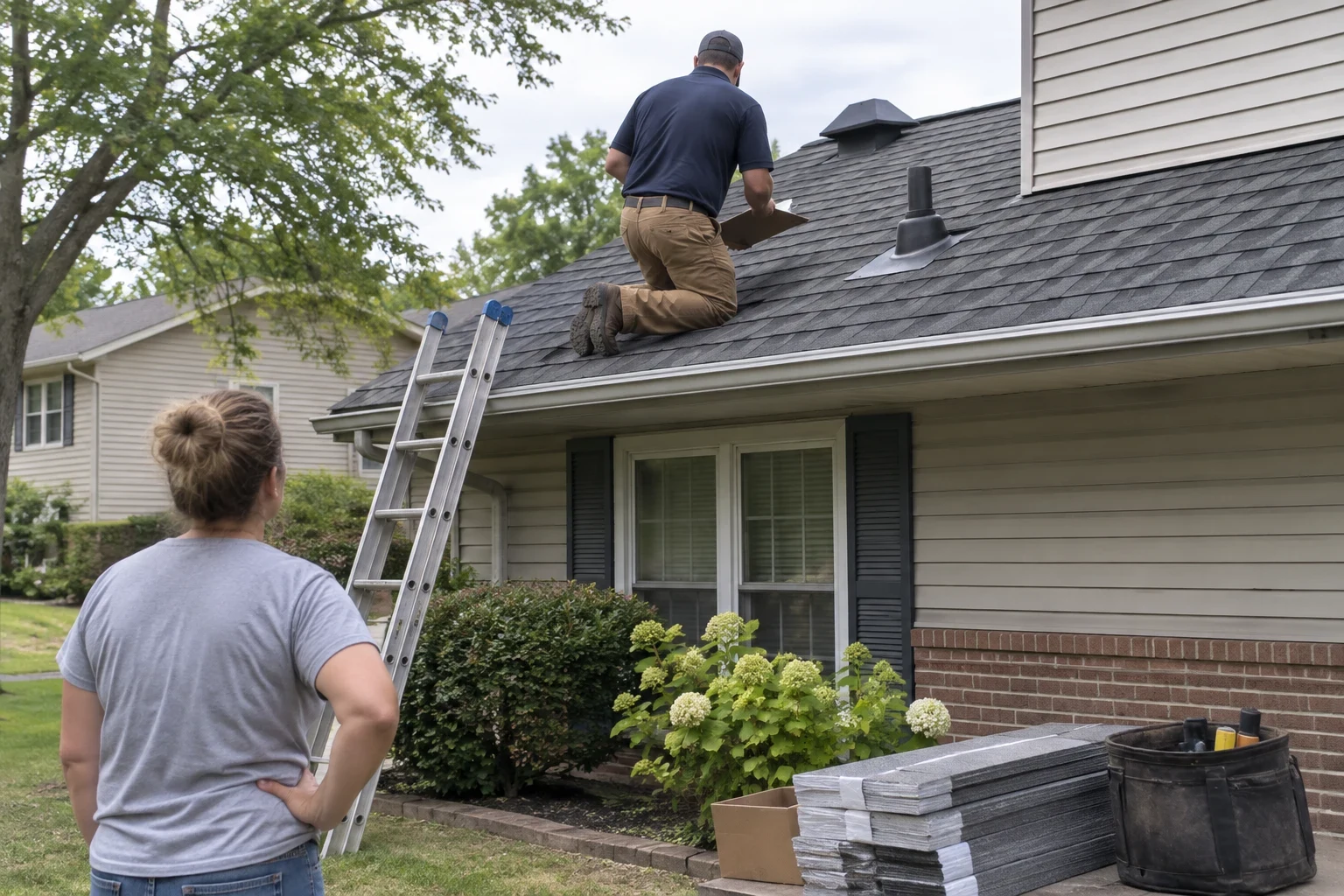
A careful look before anything is decided
Roofs seldom give out in one go. Wear shows up first at the edges and openings: a shingle tab lifting by the ridge, a split rubber boot around a plumbing stack, a chimney seal that has opened along one side. An inspection catches those details early and sorts out which ones actually matter.
We approach the visit as a conversation with your household rather than a pitch. Before the ladder goes up, we ask what you have noticed, where any stains have appeared and roughly how old you think the roof is. Once we are back on the ground, we sit down with you and go through each photo together.
Some visits end with a short list of small fixes. Others end with good news: the roof has several sound years left and simply needs watching. When the shingles have little wear left in them, we say so plainly and point to the photos that show it. That gives you time to plan a roof replacement on your own schedule, not after water has found its way through a ceiling.
What the inspection covers
Roof surface
We walk every safe slope and check for missing, creased or curled shingles, granule loss, exposed nail heads and soft spots in the decking underfoot. On metal and TPO roofs we look at fasteners, seams and membrane edges.
Flashing and penetrations
Chimneys, skylights, valleys, plumbing vents and exhaust fans are where most leaks start. We check every seal and boot, because a cracked vent collar can let water in for months before a ceiling shows it.
Attic and ventilation
With your permission we go into the attic wearing shoe covers and carrying a drop cloth for the hatch area. We look for daylight, damp insulation, dark staining on the sheathing and whether intake and exhaust vents are balanced.
Gutters and drainage
We check that gutters are pitched correctly, fastened securely and draining away from the foundation. Overflowing or sagging gutters often explain fascia rot and basement dampness.
Photos and a written summary
You receive clear photos of what we found, labeled by location, along with a written summary that separates urgent items from things to watch.
When it is worth having us take a look
A stain on the ceiling
Even a faint brown ring means water has reached the drywall. The leak on the roof is often several feet from where the stain appears.
Granules in the gutters
Shingles shed their protective granules as they age. A heavy layer in the downspout splash area is a sign the asphalt underneath is getting exposed to sun.
After a hard winter
Repeated freezing and thawing pushes water under shingles and opens small gaps. Ice dams along the eaves can lift shingles from below and leave damage that is only visible once the snow is gone.
After hail or high wind
Bruised shingles and lifted tabs are hard to spot from the ground. If a storm has passed through, an inspection tells you whether there is damage worth discussing with your insurance company.
Buying or selling a home
An independent look at the roof helps you understand what you are taking on, or what a buyer's inspector is likely to raise.
No one has looked in years
If you cannot remember the last time someone was on your roof, it is a sensible time to find out where it stands.
How the visit goes
- 1
A phone call to set a time
We arrange a time that suits you and ask a few questions about the roof and any concerns. If you would like to be home for the attic check, we plan around that.
- 2
Setting up with care
We place the ladder away from flower beds and use standoffs so it never rests on your gutters. We tell you where we will be working before anyone climbs up.
- 3
The inspection itself
We work methodically, slope by slope, then move to the attic and gutters. Most visits take about an hour, depending on the size and pitch of the roof.
- 4
Walking you through it
We sit down with you and go through the photos, explaining what each one shows and what it means for your home. You decide what, if anything, happens next, with no pressure to decide that day.
What the inspection costs, and what shapes any work after it
There is no charge for the inspection. If we find something that needs work, you get an itemized estimate in writing, with each part of the job priced on its own line, so nothing is folded into a single vague total. The points below are what raise or lower the cost of a repair or replacement.
- The decking underneath
- Plywood or plank decking that has gone soft can only be measured properly once the old shingles are off. If we notice sagging, spongy spots or stained sheathing from the attic, we tell you up front so the possibility is already on the table.
- Size, pitch and shape
- Steep slopes, multiple valleys and dormers slow the work and call for more safety equipment. A plain, gently pitched roof costs less to work on than one with many angles.
- Which material you choose
- Architectural shingles, standing metal panels and TPO membrane differ in both material price and installation time. We lay out the tradeoffs so you can weigh them calmly.
- Insurance and financing
- When storm damage is part of the picture, we work with homeowners and insurance companies on the claim. Financing is available if a larger project makes sense for your home.
Questions about roof inspections
Something not covered here? (317) 793-2581
Is the inspection really free?
It is. We do not charge for the visit, the climb, the attic check or the time we spend going over the photos with you. Nothing about the inspection commits you to hiring us for any work.
Do I need to be home?
Being there is helpful, mostly so we can check the attic and talk through the findings in person. If your schedule does not allow it, we can look over the exterior on our own and go through the photos with you over the phone later.
Will you walk on my roof without damaging it?
Our crew wears soft-soled footwear and steps where each shingle course is strongest. If a roof is too steep or too brittle to walk safely, we inspect it from the ladder and along the eaves rather than risk harm to it.
How often should a roof be inspected?
For most homes, every one to two years is sensible, plus a check after any serious hail or wind. Roofs further along in their life deserve more frequent visits, because small issues grow quickly once materials start to age.
Can the inspection help with an insurance claim?
Our photos and notes document the condition of your roof on the day we visit. If we find storm damage, we can explain how claims generally proceed and be there when your adjuster comes out. The coverage decision itself belongs to the adjuster.
See your roof through our photos
A short phone call is all it takes to arrange an unhurried visit, clear photos and an honest read on what your roof needs. We work across Cumberland and nearby towns such as Greenfield, New Palestine and Fishers.